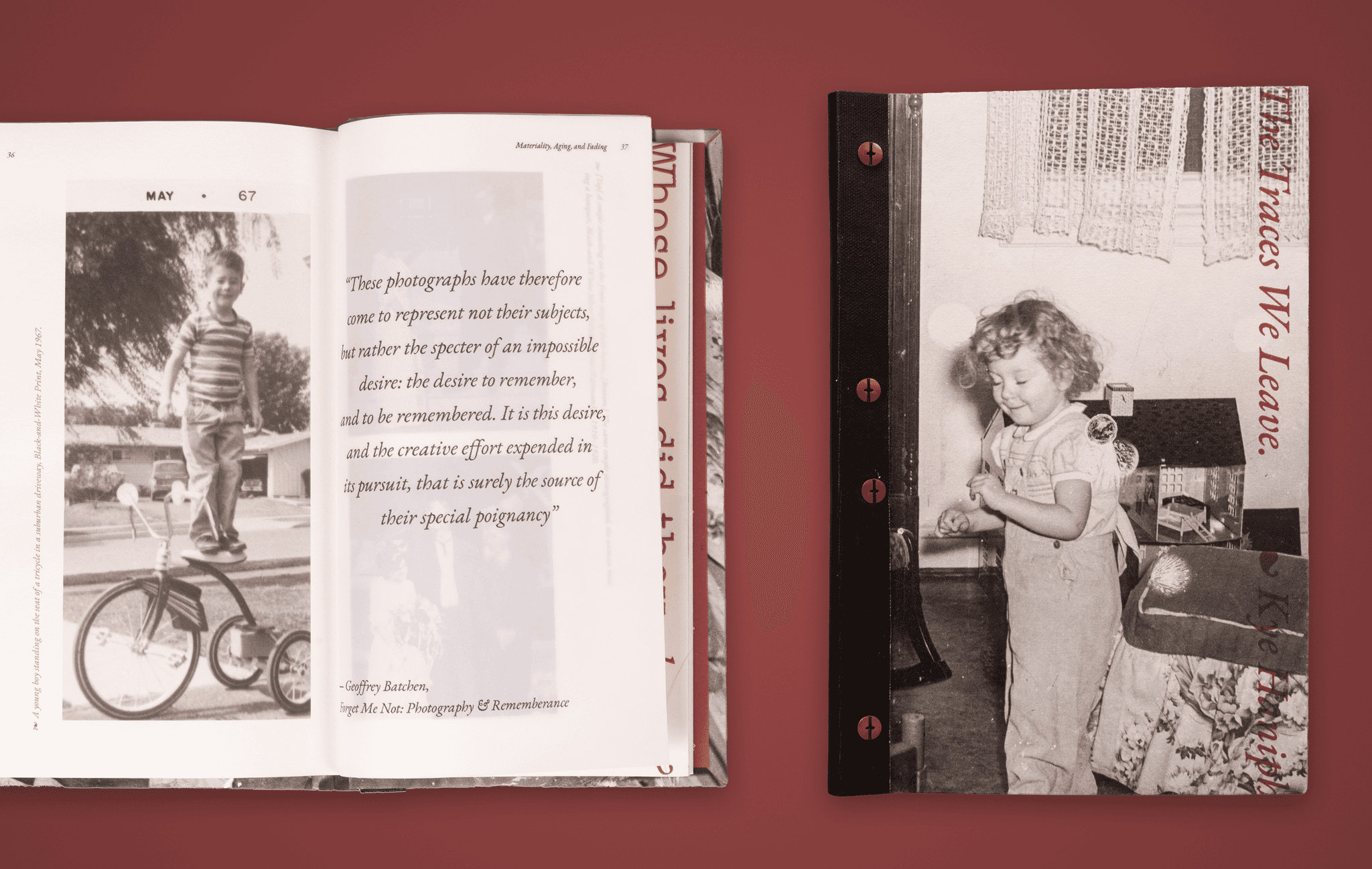
THE TRACES WE LEAVE PUBLICATION
PROJECT TYPE
INTERACTIVE PUBLICATION
SCOPE
INTERACTIVE DESIGN
PRINT DESIGN
TYPE LAYOUT
PRINTING
BINDING
INSTRUCTOR
SCOTT LASEROW
The Traces We Leave is a 49-page archival narrative, written and designed by myself and edited using AI tools, that explores the human instinct to preserve memories and moments through film photography. The narrative covers vernacular photography as a communal ritual for constructing identity and shared narratives, and highlights the physical aging of film as a mirror to the fading of memory.
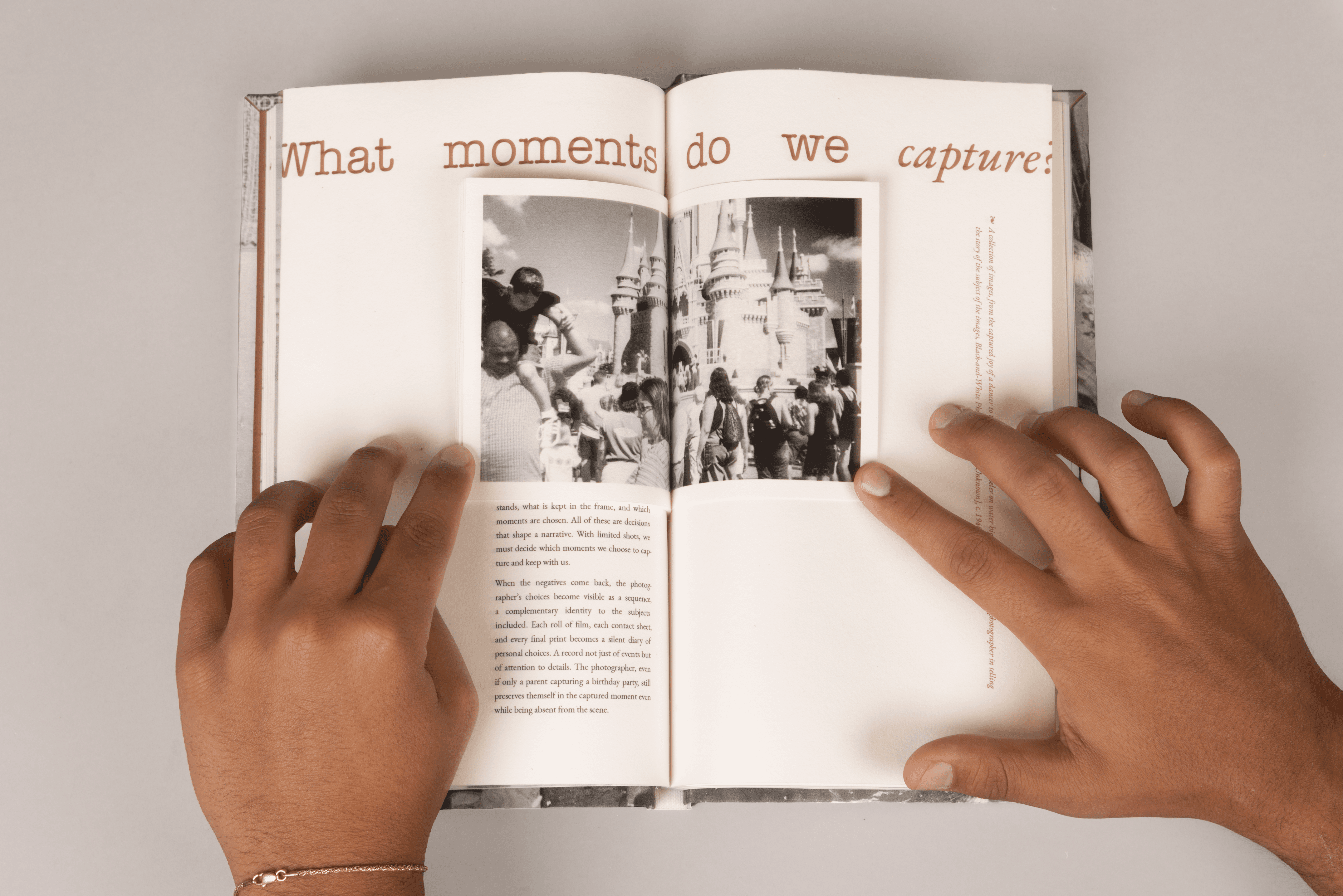
The book creates an archive of poignant memories and human connections through interactive found film photography, evocative questions, and insightful quotes carefully put together to more than a designed layout but rather a narrative inspired by a fascination with the novelty and reminiscent nature of film photography, especially as it relates to our core memories of family, childhood, and celebratory moments.
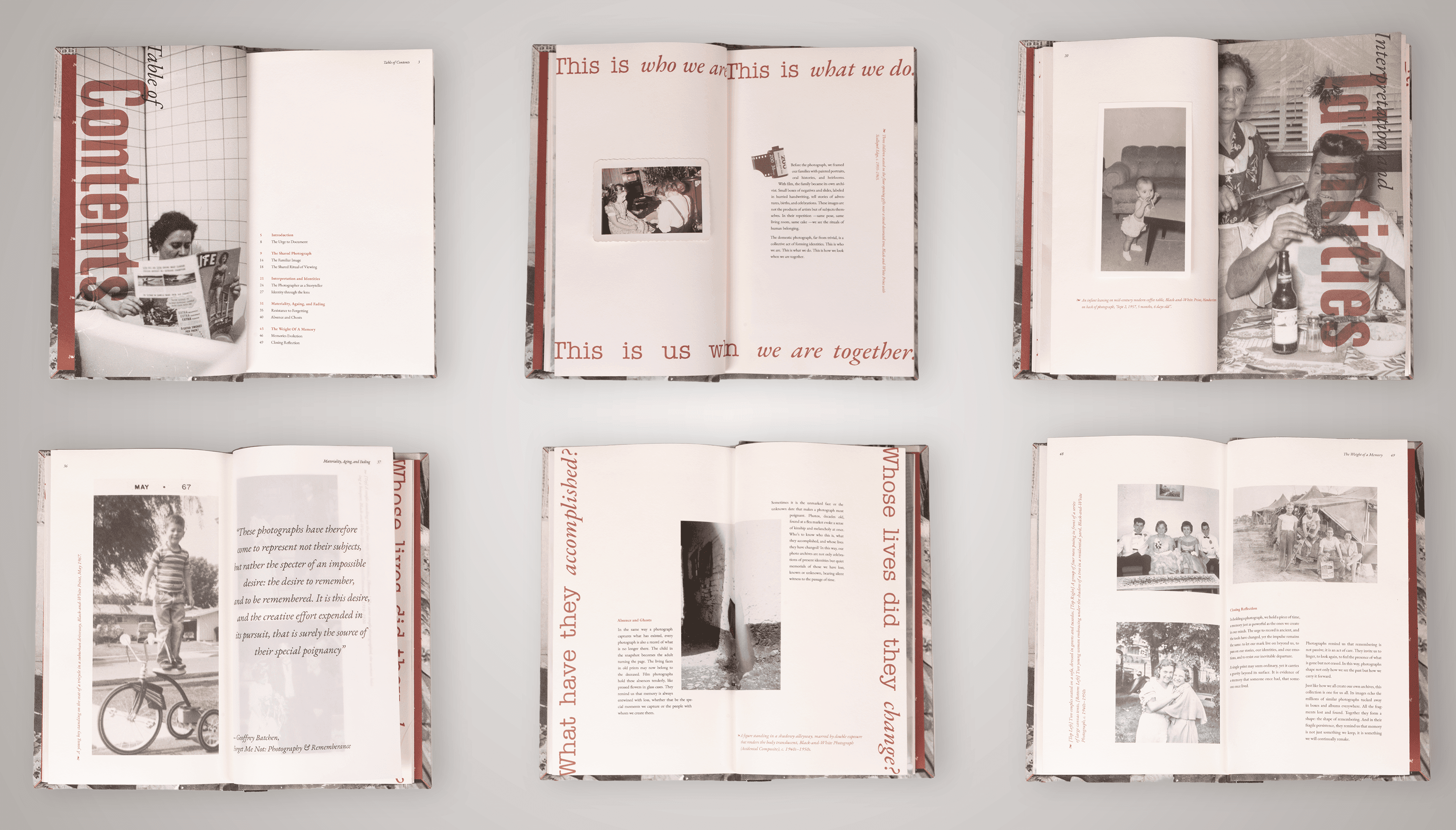
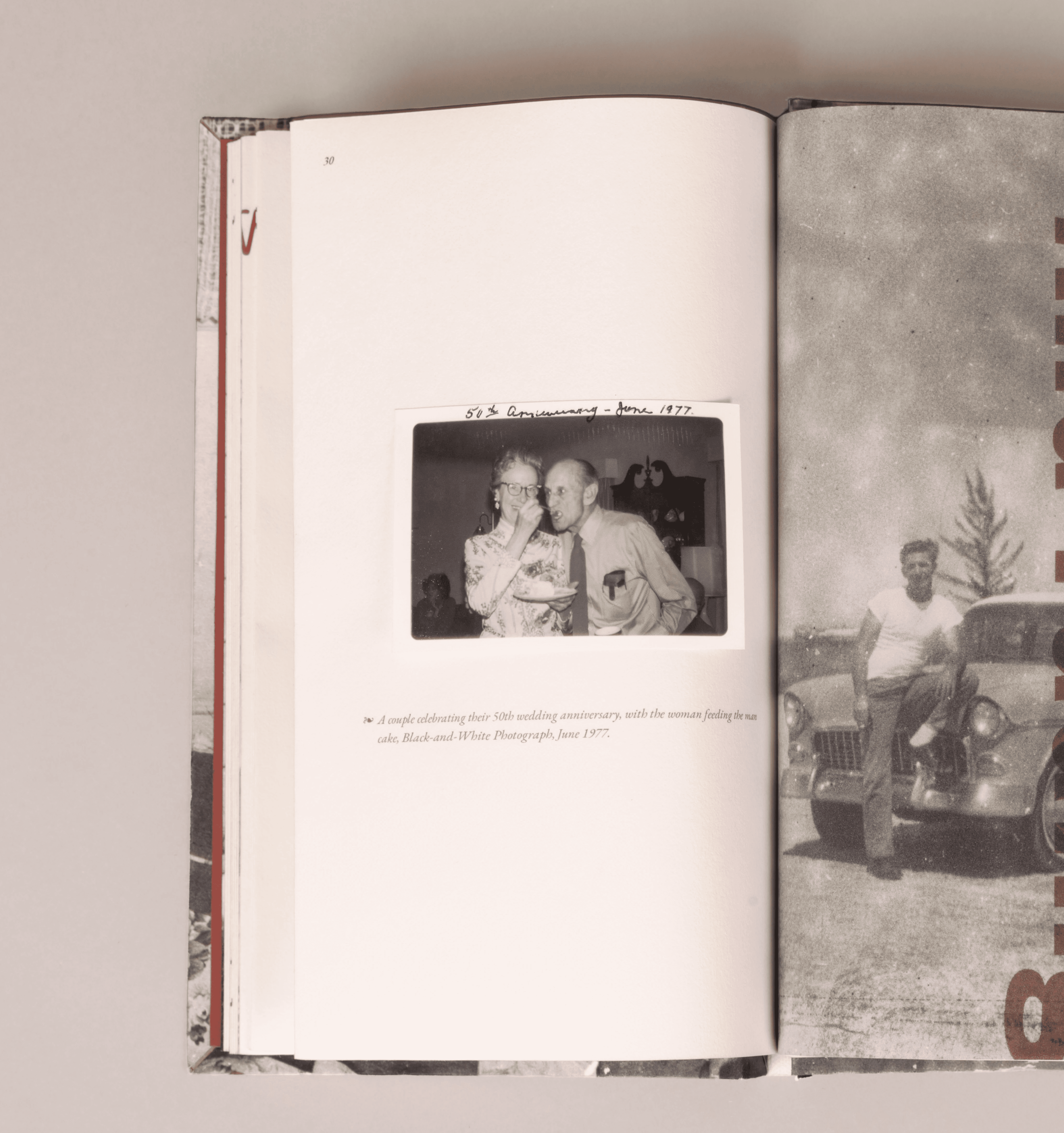
The final piece boasts French-folded pages bound together using Chicago screws, faced with a hard cover and endpapers. Each section begins with a translucent vellum header page and image drop-cap that references several film photography novelties, such as lens filters, film slides, and film canisters. Included are tipped-in prints of found photographs as well as other interactive elements such as fold-out and die-cut pages and a shortsheet booklet of additional images.
PROCESS
The book was crafted through an iterative layout exploration process, where various unique pages were drafted and narrowed down into a set of dynamic page compositions. Once a system of grids, fonts, and image treatment was established, it was then built out, eventually bringing in copy and rearranging imagery to create a full narrative. The cover, spreads, and other interactive elements were constructed into print-ready files, where they were printed, trimmed, and bound into a fully constructed book. Together, this interactive book was meticulously designed and constructed from the selected images to the precise trimming and binding, making it more than just a coffee table book.


CHAPTER 1: THE SHARED PHOTOGRAPH

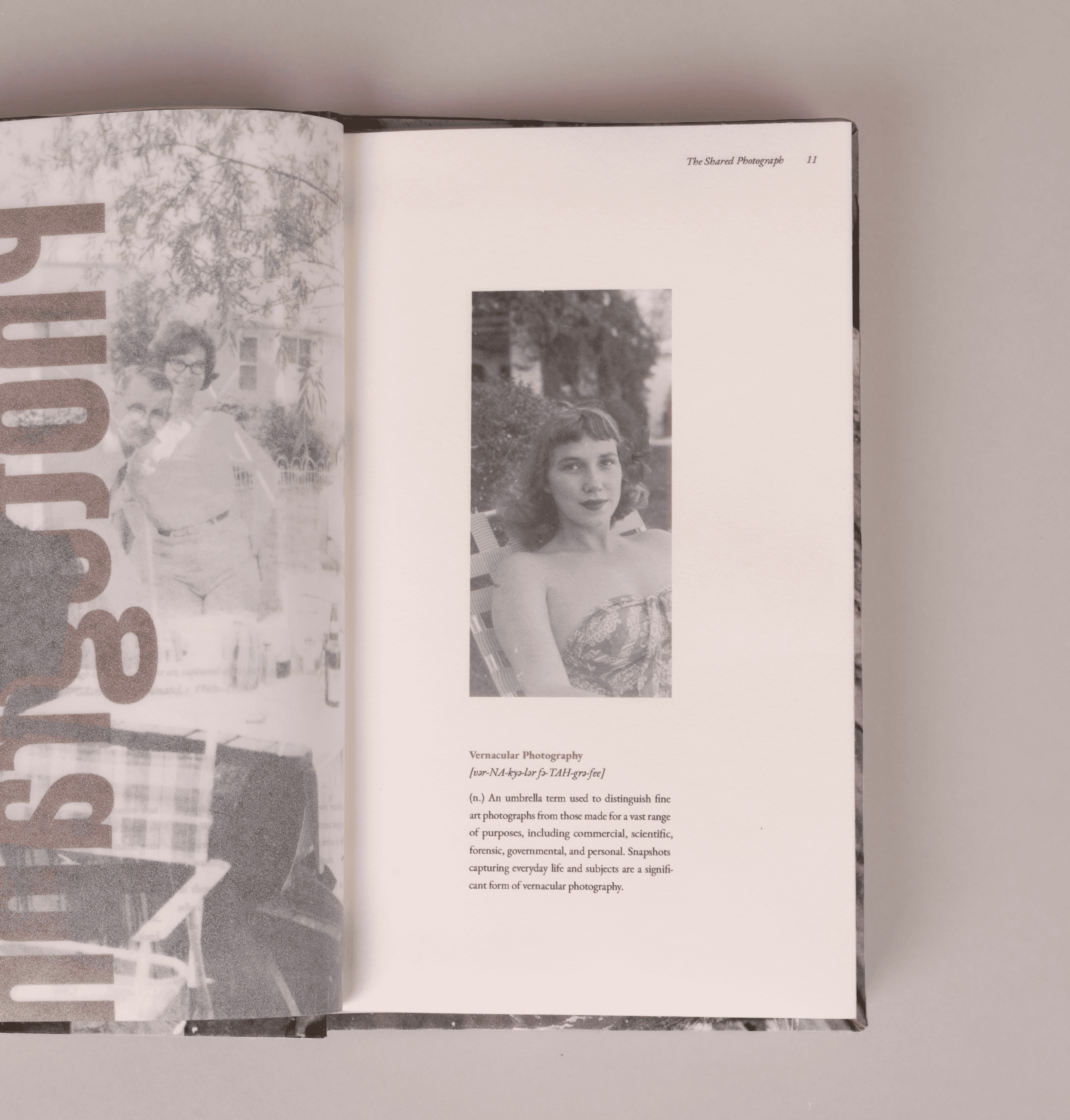
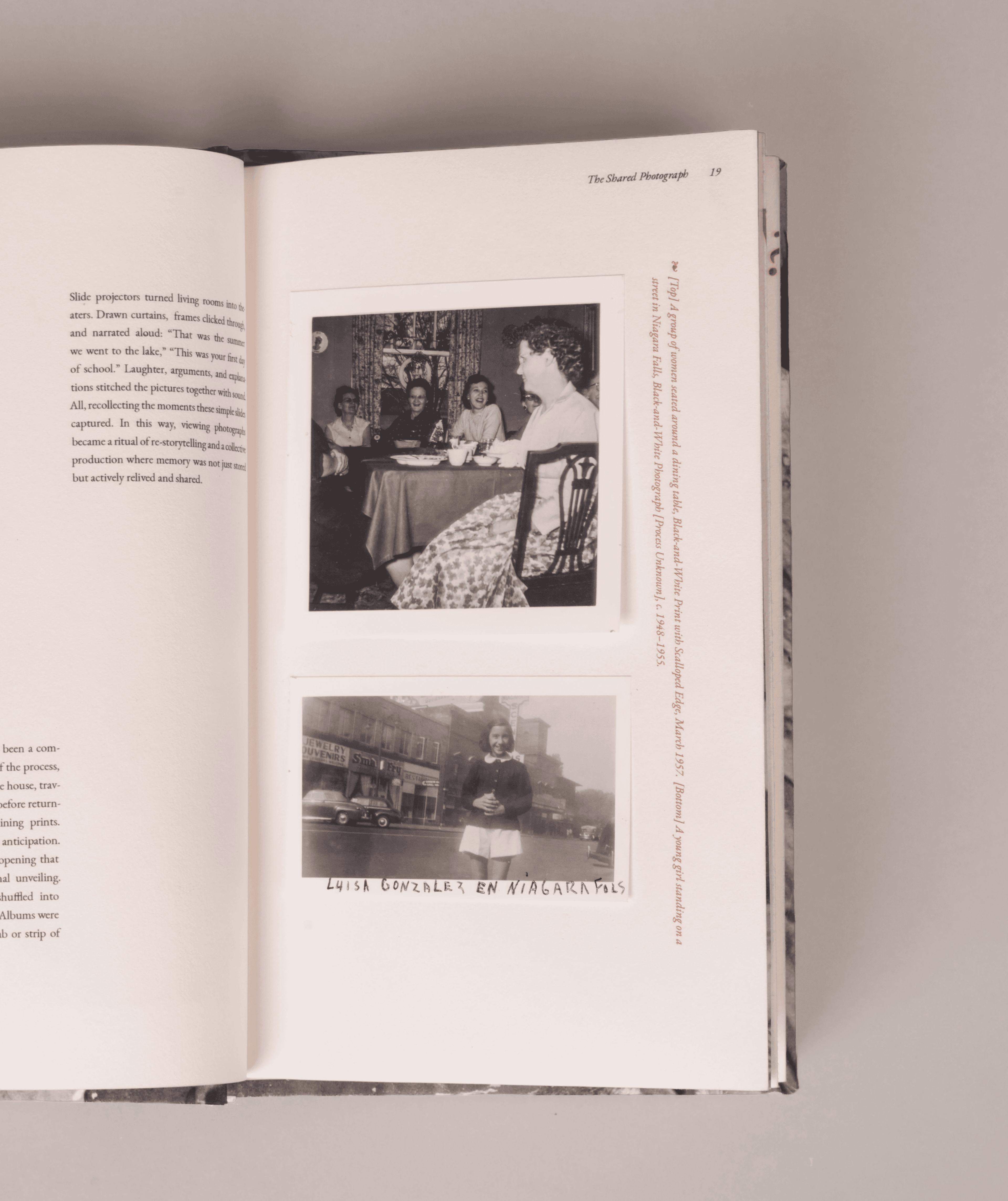
From birthdays to family barbeques to special holidays, the vernacular, familial photograph becomes a communal act of creating meaning, functioning as both a personal record and a collective ritual. These images create a shared visual language of remembrance where capturing, developing, and viewing photographs becomes just as significant as the images themselves. These photos, which may share a scary resemblance to some you or your family have taken in the past demonstrate how film becomes a social experience rooted in storytelling, memory, and connection.


CHAPTER 2: IDENTITIES AND INTERPRETATIONS

Images are not fixed in their significance. They shift depending on where they are placed, who views them, and what narratives surround them. At the same time, the act of photographing becomes a form of self-construction, where subjects and photographers alike shape identity through choice, framing, and anticipation. Each roll of film quietly records not only what was seen, but how that world was understood.

CHAPTER 3: MATERIALITY, AGING, AND FADING

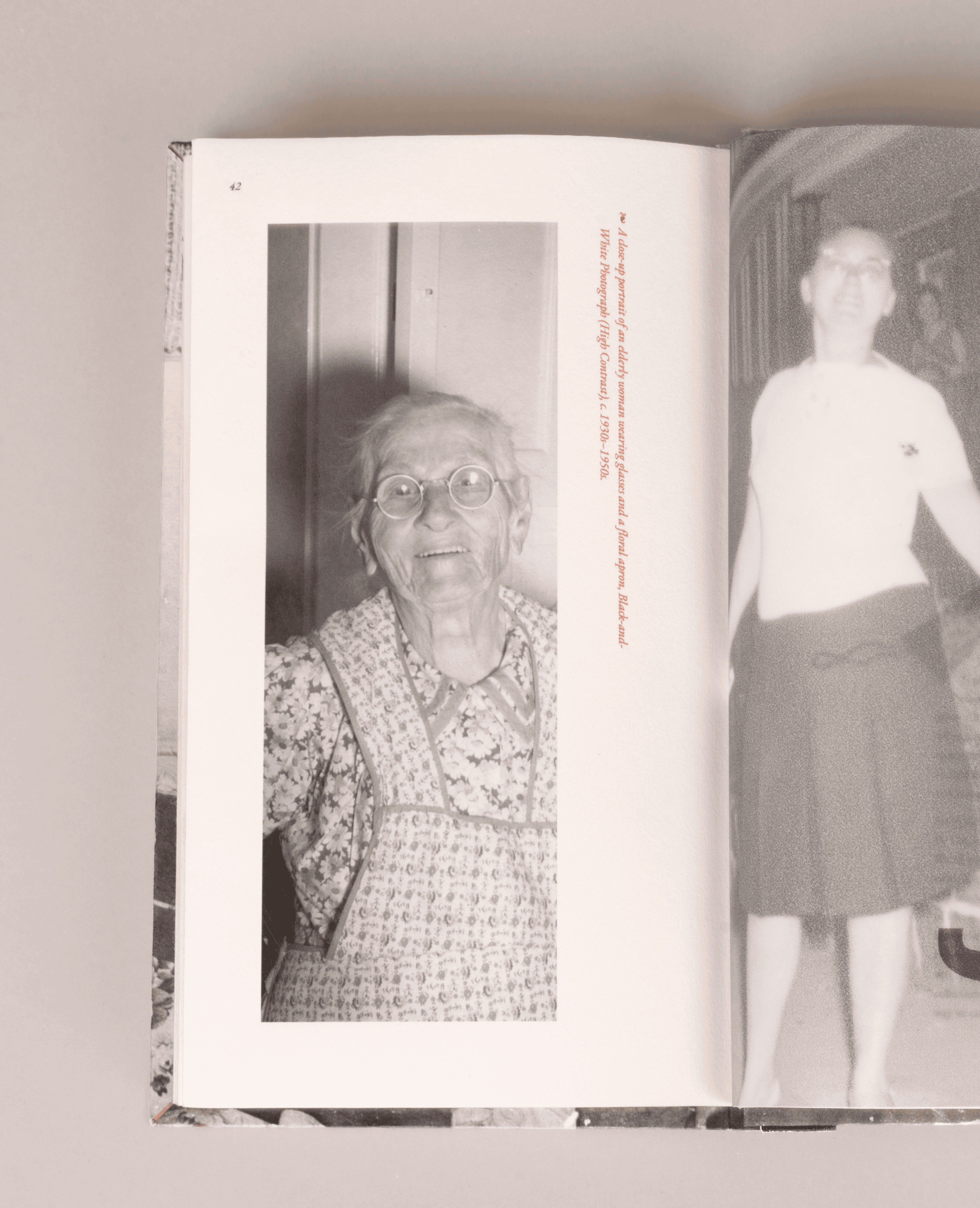
Much like our own memories, prints gather marks, fade, and wear, becoming tangible evidence of their handling and history. Rather than diminishing their value, this aging mirrors the fragility and evolution of memory itself. The photograph becomes both a preservation tool and a reminder of impermanence, holding traces of time, touch, and care within its chemical surface.


CHAPTER 4: THE WEIGHT OF A MEMORY

Wrapping up, this final section helps us consider photography as an act of resistance against forgetting, while acknowledging its quiet relationship with loss. Images hold onto moments that have already passed and people who may no longer be present, carrying both presence and absence at once. Through collecting, storing, and revisiting these photographs, archiving becomes an act of care and a way of honoring lived experiences, allowing memories to evolve alongside the viewer over time.


